
The Entire History of Netflix
From mailing DVDs in 1998 to global domination in 2026.

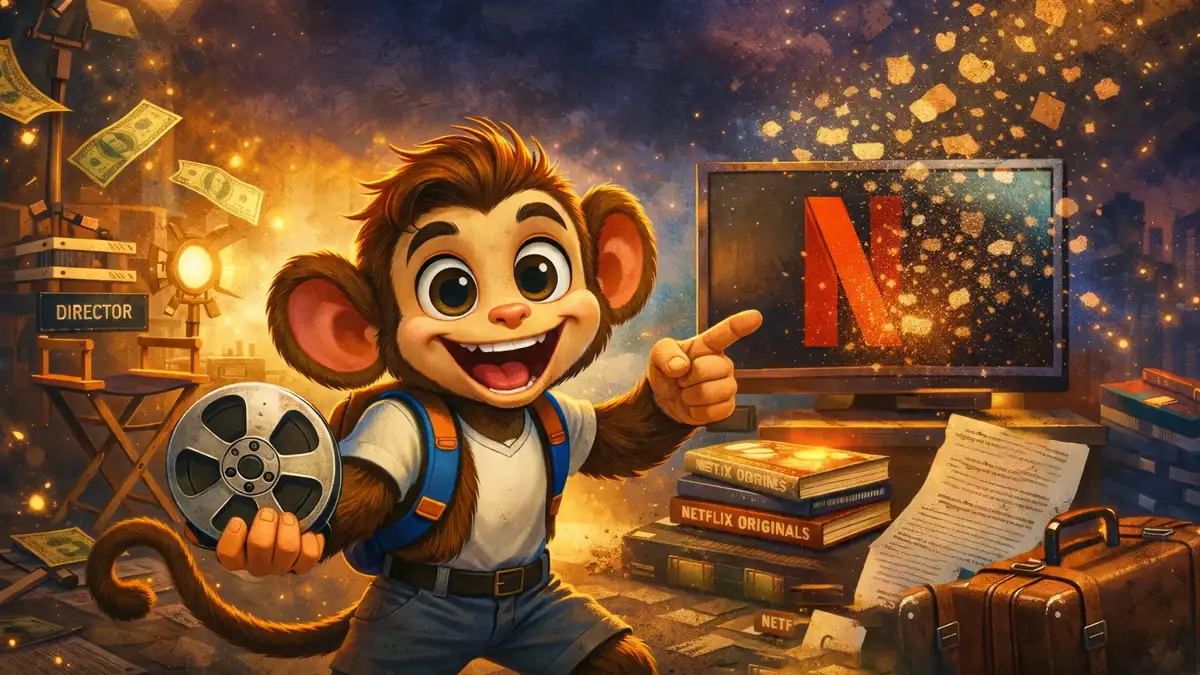
Un's Jungle Update: The Red Giant
Un here! It's hard to believe there was a time when we had to wait three days for a movie to arrive in the post. I still have a few red envelopes buried in my nest somewhere.
Netflix didn't just change how we watch TV; they changed the entire cultural landscape. From fighting Blockbuster to fighting Disney, this is the story of how a little website became the biggest channel on Earth.
Part I: The Mailbox Wars (1997–2006)
The Real Origin Story
Gather 'round. You've heard the story: Reed Hastings rented Apollo 13, lost the tape, got slapped with a $40 late fee, and swore vengeance on Blockbuster. It's great marketing, but it's fluff.
The reality? Hastings and Marc Randolph were Silicon Valley sharks looking for the "Amazon of X." They settled on DVDs because of physics: a DVD was light, durable, and cost 32 cents to mail. To prove it, they mailed a Patsy Cline CD to Santa Cruz. It arrived intact. That CD killed the video store.
The "Zero to One" Pivot
Netflix.com launched in 1998 as a pay-per-rental site. Frankly, it sucked. They were bleeding cash. The magic happened in 1999 when they introduced the "Marquee" program: $15 a month, keep the discs as long as you want. No late fees.
Suddenly, the anxiety of renting was gone. You weren't paying for a movie; you were paying for a library in your living room. In 2000, they offered to sell to Blockbuster for $50 million. CEO John Antioco laughed them out of the room. Today, there is one Blockbuster left in Bend, Oregon, and Netflix is worth more than Disney.
Part II: The Streaming Pivot (2007–2011)
In January 2007, "Watch Now" launched. It was... bad. Low resolution, 1,000 titles, and you needed Internet Explorer. But it was instant.
The Qwikster Disaster
In 2011, Reed Hastings got cocky. He decided to split the company: "Netflix" for streaming, "Qwikster" for DVDs. Two websites. Two bills. A 60% price hike.
It was a disaster. 800,000 people quit in a month. The stock tanked. It was the only time the company truly looked like it might die. Hastings had to apologise and kill Qwikster immediately.
Part III: Content is King (2012–2019)
House of Cards
Netflix knew the studios would eventually cut them off. So they outbid HBO for House of Cards ($100M). They didn't even ask for a pilot. They used data: they knew you liked Fincher, Spacey, and political thrillers. They dropped all 13 episodes at once, and "Binge Watching" was born.
The Global Launch
At CES 2016, Reed Hastings hit a button and launched Netflix in 130 countries simultaneously. It was a logistical miracle. They put servers inside ISPs all over the world. Suddenly, Netflix wasn't American; it was Earth's TV station.
Part IV: The Modern Era (2020–2025)
The pandemic was a shared hallucination where we all sat inside and watched Tiger King. In 2020, they added 26 million subs in 6 months. But the real game-changer was Squid Game (2021). A Korean show about debt cost pennies to make ($21M) and generated nearly a billion in value, proving that good stories transcend language.
The Turnaround
After a subscriber drop in 2022, Netflix broke their two golden rules: "No Ads" and "No Snitching." They launched an ad-tier and cracked down on password sharing. Everyone threatened to cancel. Nobody did. It worked brilliantly, and the stock soared back up. By 2024, they completed the transition to "Cable 2.0" by buying the rights to WWE Raw and NFL Christmas games.
Part V: The Audience Breakdown
Netflix isn't just massive; it is surprisingly diverse in how different communities engage with the platform. Recent data reveals distinct viewing habits across racial and demographic lines.
- Black Households Black audiences are among the most engaged streamers. Research indicates that 78% of Black households use multiple video platforms, higher than any other demographic. On Netflix specifically, 31% of Black viewers watch on a daily or near-daily basis.
- Hispanic Households Hispanic viewers are essentially driving the streaming dominance in the US. They dedicate 55.8% of their total TV time to streaming apps (like Netflix and YouTube), significantly outpacing the general population average of 46%.
- Asian Households Asian American audiences lead in time allocation, with streaming making up 45.4% of their TV usage. Interestingly, there is a notable drop in Asian representation in top shows (down to 6% in 2025), creating a gap between the audience and the content on screen.
- White Households While White households make up the largest raw number of subscribers (estimated at 60%), they are statistically less likely to be "heavy" users. Approximately 37% of White respondents reported never watching Netflix, the highest percentage of non-use among the major groups surveyed.
The Future (AI)
We are looking at AI dubbing next. Imagine watching a French show, but the actors speak English with their original voices, lip-synced perfectly by AI. That's the end game. A truly borderless content machine. The mailman has become the master of the universe.

Sources & References
This analysis is based on the following public disclosures:
- 1. Netflix Quarterly Earnings Reports (Q3 2024 - Q3 2025)
- 2. Nielsen "The Gauge" Report & Diverse Intelligence Series 2024/2025
- 3. Samba TV Diversity Representation Report 2025
- 4. Exclusive Analysis: Market projection and price tracking conducted by the FindCheapStreaming editorial team.